IRONMAN Malaysia 2018: My Debut, Finished With a Broken Wrist
10 min read • November 30, 2018 • By Kishlay Rai
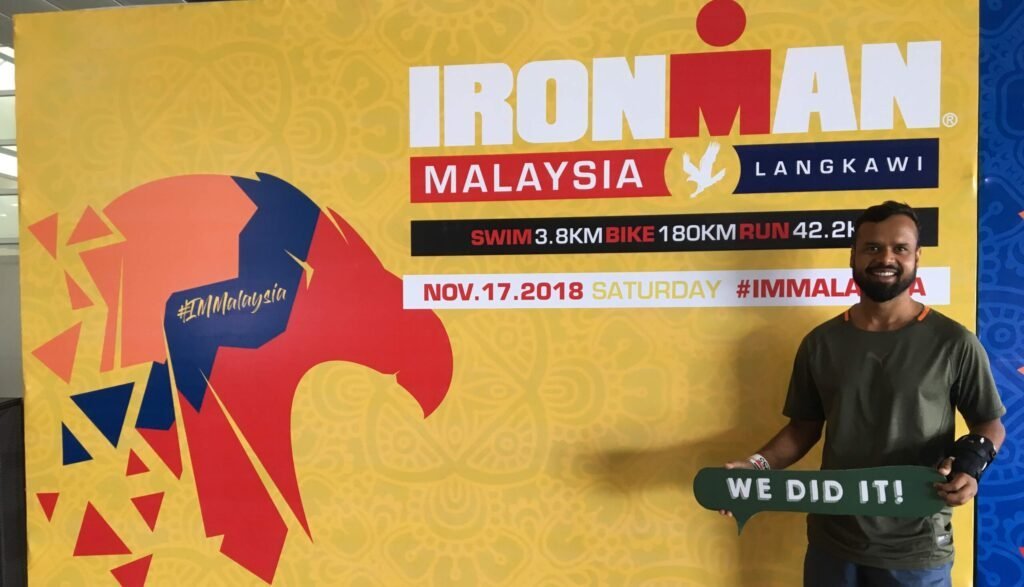
This is the race that started everything. IRONMAN Malaysia in Langkawi, November 2018 — my first Full Distance IRONMAN. I crossed the finish line in 14:15, with a broken wrist sustained on the bike at km 70. Seventeen IRONMAN finishes later, this is still the race I think about most.
How It Started
I had been running marathons for a couple of years and dabbling in olympic-distance triathlons in India. The IRONMAN dream was sparked the way these things usually are — reading a race report from someone else, watching a Kona broadcast, and convincing myself that I was the kind of person who could finish 226 km in a day. I picked Malaysia as my debut because it was the closest IRONMAN to India and the entry was open. I had eight months to prepare.
Race Morning
30°C at 6 am. Pre-race nerves were enormous. I stood in the swim corral with no idea how I would feel by sunset. Pro tip for first-timers: that uncertainty is part of the deal. Every IRONMAN debutante feels exactly that.
Swim — 1:24
Slowest IRONMAN swim split of my career and the most stressful. Two loops in calm bay water, 30°C. I had no draft awareness and no race-pace experience — I just swam by feel and tried not to swallow seawater.
Bike — The Crash at km 70
Around km 70 of the bike course, I was descending the Datai climb when a rider in front of me braked unexpectedly. I swerved, went over the handlebars onto the tarmac, and landed hard on my left wrist. The pain was immediate and sharp.
I stood up, checked the bike (it was rideable), wrapped my wrist with the spare tube straps from my saddle bag, and got back on. The race medical official at the next aid station looked at me, looked at the swelling, and said: "You should stop." I told him I would think about it at T2.
I rode the remaining 110 km one-handed on the descents and braking with my right hand only. Bike split: 7:08.
Transition — The Decision
At T2 I sat down and looked at my wrist. It was twice the size it should have been. I knew, even then, that it was broken. The medical tent was right there. I could have stopped and avoided long-term damage.
I did not stop. I changed into my run shoes, tucked my left arm against my body, and walked out of T2.
Run — The Marathon I Will Never Forget
5:35 marathon split. I walked most of the first loop. Started running short jogs in the second loop. Found a rhythm of run-30-walk-30 in the third loop. The crowd in Langkawi at sunset is incredible — locals lined the boulevard, kids handed out water, the announcer at every aid station said something encouraging.
The last 10 km I ran continuously, holding my left arm against my chest, the pain dulled by adrenaline. I crossed the finish line at 14:15:42 to my name being announced and the four words every IRONMAN debutante wants to hear: "You are an IRONMAN."
Aftermath
X-rays the next morning at Langkawi General Hospital confirmed a fractured scaphoid. Six weeks in a cast. Three months before I could swim again. But the medal was hanging on my wall, and within a year I was lining up for IRONMAN South Africa.
What This Race Taught Me About Coaching
- Finishing is a decision, not a fitness level. I was undertrained for that 2018 race. What got me to the line was a refusal to stop, not a perfect build phase.
- Pain is information, not necessarily a stop sign. But there is a line. Crossing the finish with a broken wrist worked out for me; it might not work out for everyone, and I would never recommend it to a coached athlete.
- The IRONMAN community holds you up. The medical official, the riders who slowed to check on me, the volunteers, the crowd — they were why I finished.
- The first IRONMAN finish changes you. Once you know you can survive 14 hours of hard, the bar for everything else in life resets.
Travel Guide for First-Time Indian Athletes
Same as my Langkawi budget guide. Trip cost INR 1–1.5 lakh. Visa-on-arrival for Indians. Flights via KUL.
If You Are Thinking About Your First IRONMAN
Do it. Pick a race, sign up, give yourself 9–12 months, and find someone who has done it to coach you. You do not need to be fast. You need to be willing to prepare honestly and to refuse to quit on race day. The finish line is a doorway. Walk through it.
Want help preparing for your first IRONMAN? Or read about where this journey ended up — the Kona World Championship.